
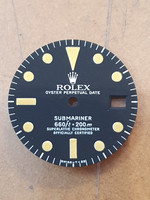
Patina and how it can affect your watches value.
Posted by Nick on 25th Sep 2026
Patina: Why Some Watch Owners Never Want Their Watch Looking "New" Again
Bring most things in for repair and the goal is simple: make it look new again. Watches are one of the strange exceptions. Ask plenty of collectors and vintage owners, and the very last thing they want is for their watch to look factory-fresh. What they want is patina — and the fact that a sign of age can actually make a watch more desirable is one of the more counterintuitive things about this hobby.
What patina actually is
Patina is the natural change that happens to certain watch materials over years of wear, light, and time. It shows up in a few different forms depending on the watch. A dial can shift from stark white to a warm cream or soft brown as the paint or lacquer ages. Luminous markers and hands, especially on older watches, often mellow from bright white or green into a rich amber or honey tone as the material breaks down chemically over decades. Steel and bronze cases can darken, develop light surface toning, or on bronze in particular, take on a genuine greenish or brown oxidation layer, the same process that happens to old coins and outdoor bronze statues. Even the leather on a strap ages and softens in a way that a new strap simply can't replicate.
None of this is damage in the way scratches or a cracked crystal are damage. It's a slow, natural chemical and physical process that happens to specific materials given enough time.
Why collectors actually want it
For a lot of collectors, patina is proof. It shows a watch is genuinely old, genuinely original, and has lived the years its reference number says it has. A dial that has aged evenly and a case with light, honest wear tells a far more convincing story than something that looks suspiciously pristine for its age. There's also simply an aesthetic appeal to it — a warm, honey-toned lume or a softly aged cream dial has a character that a brand-new watch, however well made, doesn't have. It's the same instinct that draws people to well-worn leather, aged brass, or a weathered timber table: age done naturally has its own kind of beauty.
How it affects value — and it can go both ways
This is where things get genuinely interesting, and where patina stops being simple. Even, attractive patina on an otherwise well-preserved watch can add real value, sometimes significantly so, particularly on vintage pieces where original, unrestored condition is prized above almost everything else. Collectors will pay a premium for a dial that has aged into a rare, sought-after colour, sometimes given nicknames within collector circles for a particularly desirable shade.
But patina cuts both ways. Uneven ageing, water damage disguised as patina, moisture that's gotten in and caused blotching or corrosion rather than a clean, even tone, all of that can significantly hurt a watch's value and, more importantly, can be a sign of a genuine problem rather than simple character. There's an important difference between patina and damage, and it's not always obvious to an untrained eye. Cleaning, repainting, or over-polishing away original patina is often considered a serious mistake in the collecting world, one that can permanently reduce a watch's value by erasing exactly the originality collectors are paying for.
Why it's worth getting a professional opinion
If you own a watch with visible ageing and you're not sure whether what you're looking at is desirable patina or a sign of a real problem, that's exactly the kind of thing worth having assessed properly before you do anything to it, including nothing at all. We can tell you whether what you have is worth preserving exactly as it is, whether it needs attention, or whether it's actually more valuable than you might think.